Probably the best way to deal with your feelings is to locate them in your body. Feeling your emotions as body sensations takes much of the scariness out of them. Feelings are always located somewhere: a tightness in the throat, a quivery sensation in the solar plexus, a heaviness in the shoulders. But until you pinpoint the feeling as a body sensation it can seem monstrous, bigger than you are. In fact, the first key move in releasing yourself from the grip of a feeling is to locate it in time and space. — From Conscious Loving, by Gay & Kathlyn Hendricks
When you shut down emotions, you're also affecting your immnue system, your nervous system. So the repression of emotion, which is a survival-strategy, then becomes a source of physiological illness later on.
– Gabor Mate
- If you feel overwelmed
- garbor-mate
- what is the role of emotions?
- its to let in what is healthy and nurturing and welcome and to keep out what is not
- same with the nervous-system
- what is the role of emotions?
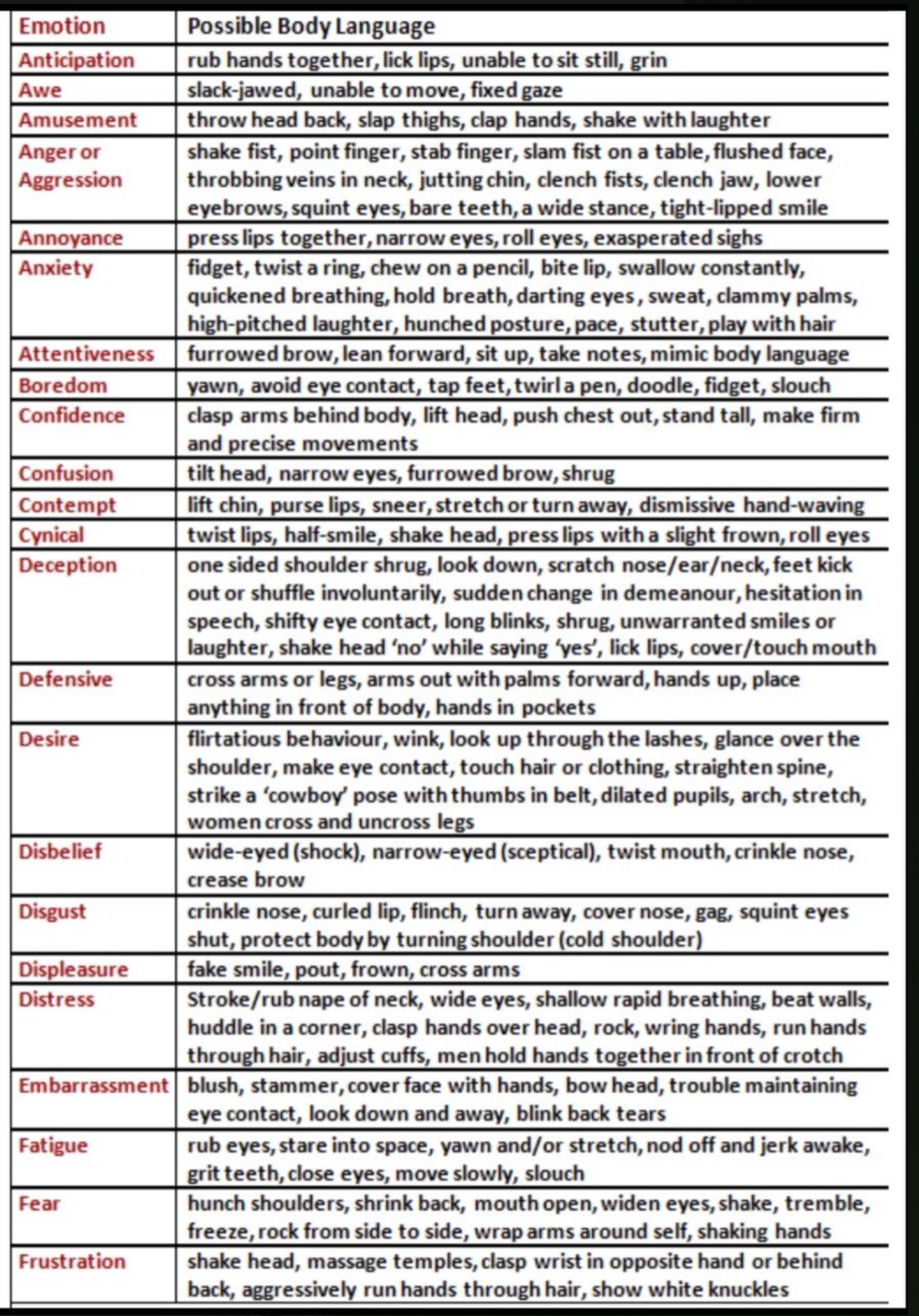
- emotion = affect + narrative
Notes
https://academic.oup.com/scan/article/12/1/1/2823712
The Theory of Constructed Emotion (Article) Lisa Feldman Barrett
There is no “fear circuit” in the brain. Decades of neuroscience research have failed to find one—no consistent facial expression, autonomic pattern, or set of neurons that fires for fear across all people.
Lisa Feldman Barrett argues emotions aren’t hardwired responses. They’re predictions your brain constructs using past experience.
Your brain is constantly running simulations of the world to maintain physiological balance (allostasis). Its internal model tracks two things:
Patterns in the external world (what you see, hear, smell, etc.) Patterns in your body’s internal state (heart rate, blood pressure, glucose levels, etc.)
Your brain compresses what’s happening in your body (2) into affect—a background feeling with two dimensions:
Valence: pleasant vs. unpleasant Arousal: activated vs. calm
Everyone has some affect, all the time. You are always feeling some amount of pleasantness and some amount of activation.
Feldman’s idea is that your brain is using that affect plus your past experience to assemble a distribution of possible interpretations, each with some probability of matching the current situation.
The same affect can be experienced as different emotions by different people based on past experience.
Take someone activated (high arousal) with neutral valence about to give a presentation. If past experiences with high arousal in performance contexts were positive, their brain categorizes these sensations as excitement. If past experiences were negative, the identical physiological state gets categorized as anxiety or fear.
The exact same affect and same external situation can trigger excitement in some people and anxiety in others, depending on their past experiences in similar situations.
A therapeutic implication: If you have bad conceptual models built from past experiences (trauma in therapy-speak), you can get stuck in a local maximum.
Your brain needs fewer sensory inputs to confirm existing patterns, even when they’re not accurate.
Example: You meet an emotional man. Your priors say “men who share emotions are manipulative.” So you interpret weak evidence as confirmation, he acts defensively in response, and your brain treats that as further confirmation.
To get out of it, you need something like exposure therapy. You need a set of good interactions in a challenging scenario that alter your distribution of priors. If conflict generates a fear response, you need to engage in conflict and see that nothing bad happens. Over time, conflict gradually stops triggering fear responses because your brain updates its conceptual model with new statistical regularities
books
- The Healing Power of Emotion: Affective Neuroscience, Development & Clinical Practice
- How Emotions are Made: The Secret Life of the Brain
courses
See
- emotions-feelings
- affect
- emotional-intimacy
- emotional-articulacy
- emotional-literacy
- emotional-musculature
- alexithymia
- emotional-effector-patterns
Links
- Emotions 101
- Emotion: The Self-regulatory Sense
- https://emotionalbody.co/
- How do I know if I repress my emotions?
- Meta-emotion - Wikipedia
- https://www.wutstock.at/fragen-antworten
- https://open.substack.com/pub/abinoda/p/emotions-and-developer-productivity?utm_source=share&utm_medium=android&r=1b3ie
- person.jonny-miller.the-best-decision-making-is-emotional
- https://www.blog.selfsalutation.com/p/spellswecast
- Chris Lakin auf X: „Emotions like loss signals, shows prediction error between your model of the world and the world. When you fully feel an emotion (let the error propagate through the entire network without interruption), complete backpropagation occurs. The gradient gets applied, weights are https://t.co/JEOgIqx9Ss“ / X
- Why You Can’t Relax - Emotional DEBT - YouTube